39th Bled eConference
CO-CREATING HUMAN-CENTRED AND
RESPONSIBLE DIGITAL FUTURES
June 7 – June 10, 2026 | Bled, Slovenia
Latest News
Keynote speaker announcement: Prof. Dr. Henderik A. Proper
Keynote speaker anouncement: Prof. Dr. Henderik A. Proper – Towards Architectural Coordination for Digital Twins

Prof. Dr. Henderik A. Proper will present: Towards Architectural Coordination for Digital Twins
Digital Twins (DTs) carry the promise of supporting better decision-making, monitoring, and learning in relation to the twinned entity, by integrating novel technologies, including digital models, symbolic and sub-symbolic artificial intelligence, as well as advanced optimisation, simulation, and visualisation techniques. At the same time, delivering such a promise requires considerable investments, which can only valorise in the long run, as DTs tend to be “data hungry”, in need of ample sensors, actuators and serious computing power.
Yet, most current approaches to DT development focus on isolated scenarios, which not only limits the understanding of the value of DTs, but also their broader implications. The introduction of DTs, generally, also entails a wider digital transformation in an (inter-)organisational context, while such transformations need to be properly managed.
We argue that, to improve the socio-economical sustainability of DT solutions, their development, deployment and evolution need to be subject to architectural coordination within the broader frame of enterprise architecture management (EAM), while also catering for different concerns (security, privacy, etc) of different stakeholders.
From this perspective, we discuss some potential directions of research in (enterprise) architectural coordination of DT development, in order to help address some crucial challenges of socio-economically sustainable development and evolution of DTs as part of a broader portfolio of information systems.
About Prof. Dr. Henderik A. Proper
Erik for friends, is Full Professor in Enterprise and Process Engineering in the Business Informatics Group at the TU Wien. He is co-author of a wide range of conference publications, chapters in books, journal papers, and books. Erik has a mixed background, covering a variety of roles in both academia and industry. His core research drive is the development of theories that work. His general research interest concerns the foundations and applications of domain modelling; in particular in the context of enterprises. Over the past 20 years, he has applied this research drive and general research interest towards the further development of the field of enterprise engineering, and enterprise modelling in particular. Erik is presently chair of the IFIP 8.1 working group on information systems engineering, while also being the representative for the Netherlands in IFIP’s TC8 technical committee. He is also the Stellvertretender Sprecher (vice chair) of the EMISA working group of the German Computer Science Society (Gesellschaft für Informatik).
Join the RIDI Workshop – Let’s Rethink Research for Impact
Research for Impact in Digital Innovation
Topics like Digital Transformation and Business Model Innovation are currently driving initiatives in industry; not only to introduce new technologies but also to gain significant business benefits. Hence, technology is not just seen as a means on its own but as one factor among others. Each digitally innovative project needs to incorporate the context of an organisation (market, customer segments) as well as its organisation and staff members. Challenges during such an endeavour are manifold. As a result, there is also an increased need in practice for more explicit guidance in terms of lessons learned, methods, approaches, principles, and design concepts.
Developing, such explicit guidance through conceptualizing and operationalizing entails a need for demand-driven research and education, requiring synergies between applied research and practice. It also sparks a need for research methods that strike an effective balance between real-world needs and contexts, with appropriate scientific rigour.
In line with this, the workshop aims to provide a platform for individuals contributing to the development of explicit guidance for digital innovation by using research methods. This specifically includes practitioners and researchers within the context of technical and applied sciences. The platform fosters exchange by discussing success stories and experiences from the field together with methodological approaches. It, furthermore, aims to provide a base to shape a research agenda, together with corresponding methods, to enable research in practice
Join us at the Bled eConference on Sunday, June 8th, at 10:00 AM.
We look forward to seeing you there!
Keynote speaker announcement: Simon Delakorda

About Simon Delakorda
Simon Delakorda (M.Sc.) is digital democracy and e-participation practitioner and researcher. He is an executive director at the Institute for Electronic Participation (https://www.inepa.si/) and head of advocacy at the National network of non-governmental organisations for an inclusive information society (https://www.informacijska-druzba.org/).
Since 2000, he participated in 40+ digital democracy projects within academic and NGO sector in Slovenia and at the EU level. He is an author and co-author of articles and case studies and conference speaker on democracy, political participation, active citizenship, non-governmental organizations and governments on-line.
His current projects and research focus combines digital democracy research & development, e-government, open source, information society and digital transformation policy. His memberships include the Digital cluster of Civil Society Europe and the Slovenian Political Science Association.
Simon Delakorda will present: Digital humanism: lost in translation?
This keynote explores the conceptualization of human beings within the context of digital transformation in the EU, where predominant narratives portray individuals as digital professionals, spontaneous adopters, or bureaucratic participants. It critiques these instrumentalized views by highlighting the lack of an emancipatory understanding of humanity in initiatives like the Digital Slovenia 2030 Action Plan. Advocating for a holistic approach rooted in digital humanism, the talk emphasizes the need for democratic participation, human rights, and deliberative public policy creation to ensure that digital transformation serves societal betterment rather than merely economic interests.
Early Bird registration closing soon
Dear Colleagues,
Don’t miss your chance to register for the Bled eConference at the reduced early bird rate! The early bird registration period ends on May 15, 2025. After this date, the regular (higher) fee will apply.
We kindly remind authors presenting accepted papers that at least one author must attend the conference in person to present their work.
Register for the conference at following this link.
We look forward to seeing you in Bled!
38th Bled eConference Call for Papers – Submission deadline extension
Dear Colleagues,
based on multiple requests, we have extended the paper submission deadline to March 21st.
Please note that there will be no more extensions.
The Easychair submission system is open and can be accessed through this link.
We look forward to your contributions!
35th Bled eConference proceedings indexed in Clarivate Web Of Science
We are pleased to announce that the proceedings of the 35th Bled eConference – Digital Restructuring and Human (Re)Action – have been indexed in Clarivate Web of Science under the tag number WOS:001205909100001.
Congratulations to all the authors on this achievement!
Important
About conference
Bled eConference has been shaping electronic interactions since 1988. Small supportive community offers the opportunity to benefit from expertise of esteemed researchers. It attracts speakers and delegates from business, government, information technology providers and universities and is the major venue for researchers working in all aspects of digital transformation.

The conference venue is the Alpine village of Bled, 30 km south of the Austrian border – one of the most beautiful spots imaginable. Expect to learn and play and come away feeling that you have achieved more than you normally would at any conference.
With fresh ideas and complementary themes we would like to establish a creative environment for researchers, government, industry/business representatives and technology providers and an attractive meeting point for discussing new R&D and project ideas, also in the spirit of Horizon 2020.
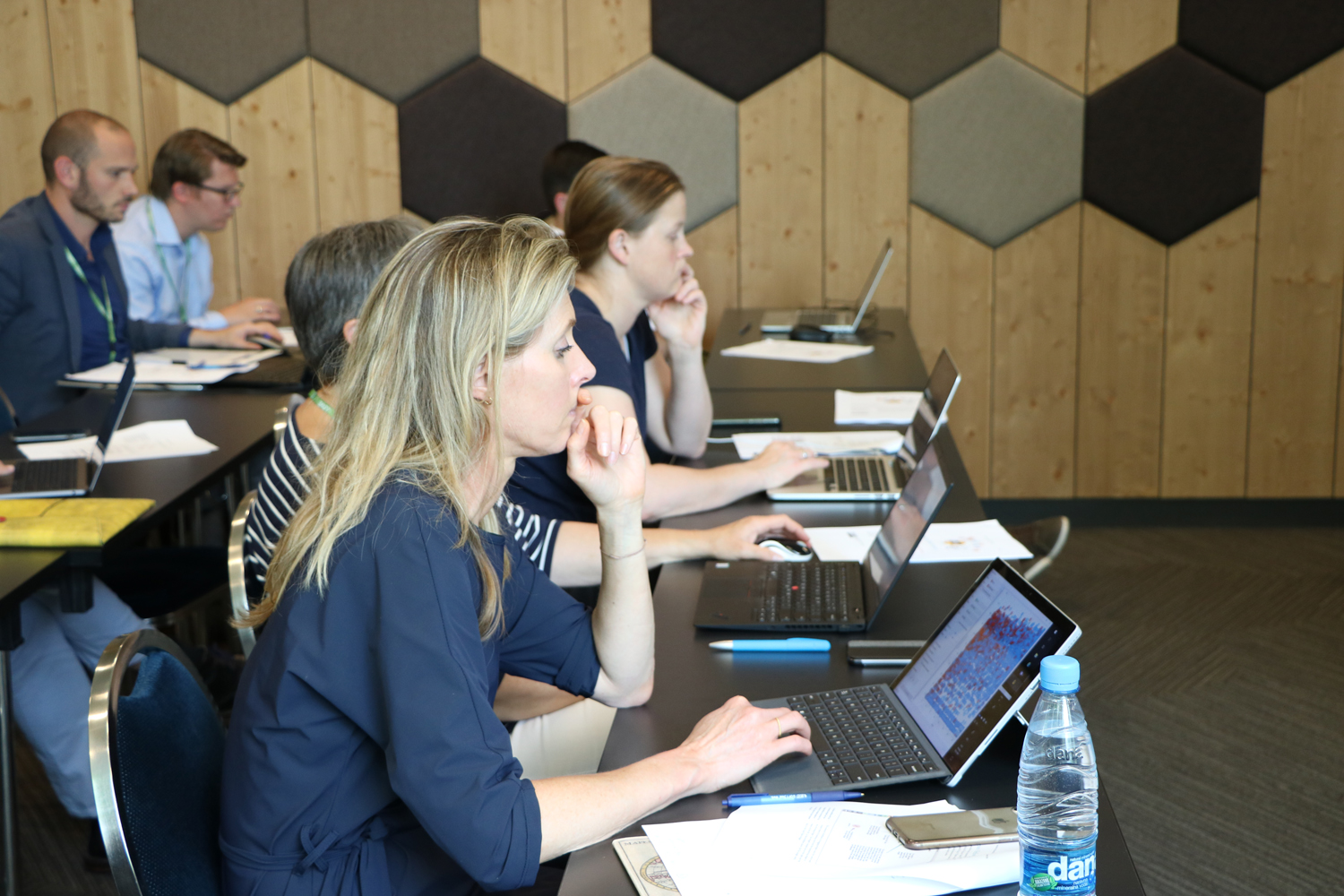
- a fully-refereed Research Track, devoted to researchers in all aspects of digital transformation;
- Doctoral Consortium, offering students to present their ongoing master’s and PhD study results;
- ePrototype Students Bazaar, offering students opportunities to present innovative e- or m-Business or IoT ideas, models, prototypes and apps;
- a Business and Government Panel Track which attracts eminent business and government leaders from Europe, the Americas and Asia-Pacific;
- Business, Government and Academic Workshops and Meetings offering unparalleled opportunities to discuss, share and learn with colleagues from around the world;
- EU projects dissemination meetings; enabling project partners to connect with other similar projects and to disseminate results to a wider community.